

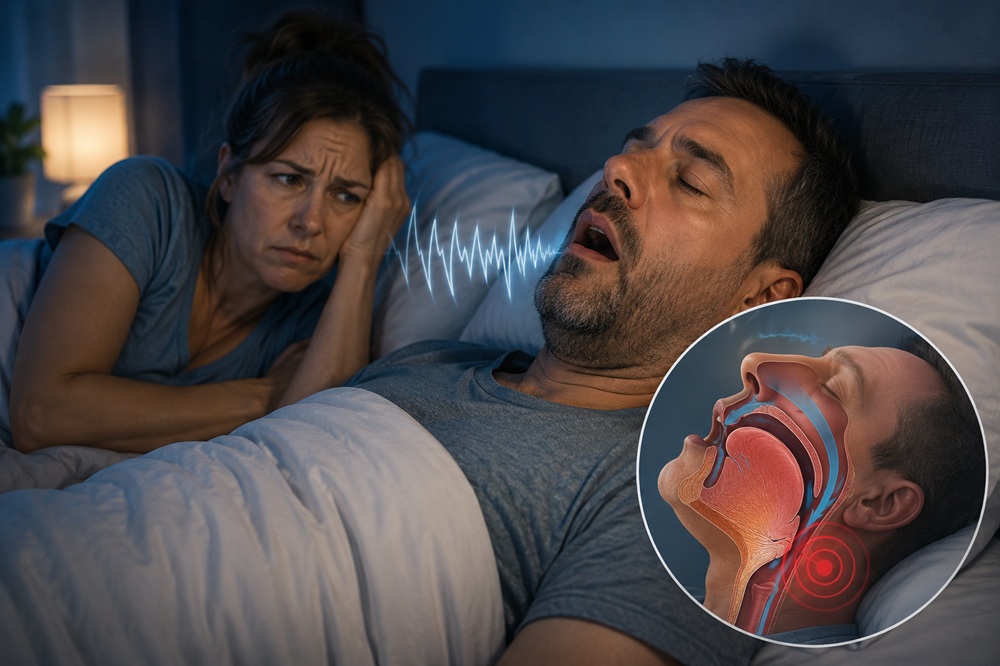
Snoring is often treated as a harmless joke: the noisy sleeper gets teased, the partner reaches for earplugs, and everyone carries on. But the sound is really a sign that air is not moving freely through the upper airway during sleep. In many people it is simply an occasional nuisance caused by sleeping position, congestion, alcohol, or tiredness. In others, frequent or very loud snoring can sit alongside disrupted sleep and breathing problems that deserve more attention. The important point is that “common” does not always mean “irrelevant.”
That is also why people looking at the best anti snoring devices should start by thinking about the likely cause of the noise rather than buying the first gadget that promises silence. Different products are designed to tackle different problems. A nasal dilator may help when airflow through the nose is restricted, while a mouthpiece is intended to change the position of the jaw or tongue. A device that suits one sleeper may do very little for another, and no consumer product should be treated as a substitute for assessment when there are signs of sleep apnoea.
Why snoring happens
Snoring is created when relaxed tissues in the throat and mouth vibrate as air passes them. The chance of that happening can increase when the airway narrows. Sleeping on the back can allow the tongue and soft tissues to fall backwards, nasal congestion can make breathing less efficient, and alcohol can relax airway muscles more than usual. Body weight, facial anatomy, age and smoking can also play a part. Because several factors can overlap, there is rarely one universal fix that works for everybody.
Occasional snoring after a late night or during a cold is not the same as heavy snoring every night. Patterns matter. If a partner notices pauses in breathing, choking or gasping, or if the sleeper wakes with headaches and feels unusually sleepy during the day, the issue may extend beyond noise. Those symptoms can occur with obstructive sleep apnoea, a condition that should be assessed by a qualified healthcare professional rather than managed only with an anti-snoring product.
The main types of anti-snoring products
The market ranges from very simple products to devices that alter the position of the jaw. Nasal strips sit on the outside of the nose and gently pull the nostrils open. Internal nasal dilators perform a similar job from inside the nostrils. These options are most logical when nasal resistance is part of the problem, although they will not address obstruction that is happening farther back in the throat.
Mandibular advancement devices are worn in the mouth and hold the lower jaw slightly forward. By changing the position of the jaw and tongue, they can create more room for airflow. Fit and comfort matter, especially because a badly fitting mouthpiece can lead to jaw discomfort, drooling, dry mouth or dental issues. Custom-made devices supplied through dental or sleep professionals can be more expensive, but they can also be adjusted more precisely than a generic boil-and-bite product.
Positional aids take a different approach. They are designed to discourage back sleeping, which can reduce snoring in people whose symptoms are strongly position-dependent. Some are simple wearable supports, while newer products use vibration to prompt the sleeper to turn onto their side. The principle is straightforward, but it only makes sense when sleeping position is actually a major trigger.
What to look for before buying
Comfort should be near the top of the list because a device that cannot be tolerated will end up in a drawer. It is also worth checking how the product is cleaned, whether replacement parts are required, whether it can be adjusted, and whether there is a realistic trial or returns policy. Marketing claims deserve caution. Snoring can have several causes, so sweeping promises that one small product will permanently solve every type of snoring should be treated sceptically.
Think about the symptom you are trying to address. If the nose feels blocked at night, a nasal product may be a sensible first option. If snoring is worse on the back, positional changes may be more relevant. If the problem appears to involve the jaw or tongue, a mouthpiece may be considered. Recording when the snoring happens, whether it changes with position, and whether there are breathing pauses can provide useful information before choosing anything.
Small changes can matter too
Not every improvement has to come from a device. Reducing alcohol close to bedtime, treating temporary nasal congestion appropriately, keeping a consistent sleep schedule, avoiding smoking, and addressing weight where relevant can all affect snoring for some people. Side sleeping can also be surprisingly effective when snoring is positional. These are not instant cures, but they can be part of a more sensible approach than relying on a gadget alone.
The best anti snoring devices are therefore best viewed as tools for particular situations, not magic fixes. The useful question is not simply “Which product has the highest rating?” but “What is most likely causing the snoring, and does this device address that cause?” If snoring is persistent, disruptive or accompanied by breathing pauses, gasping or significant daytime sleepiness, professional assessment should come first. Silence at night is valuable, but healthy breathing and restorative sleep matter much more.